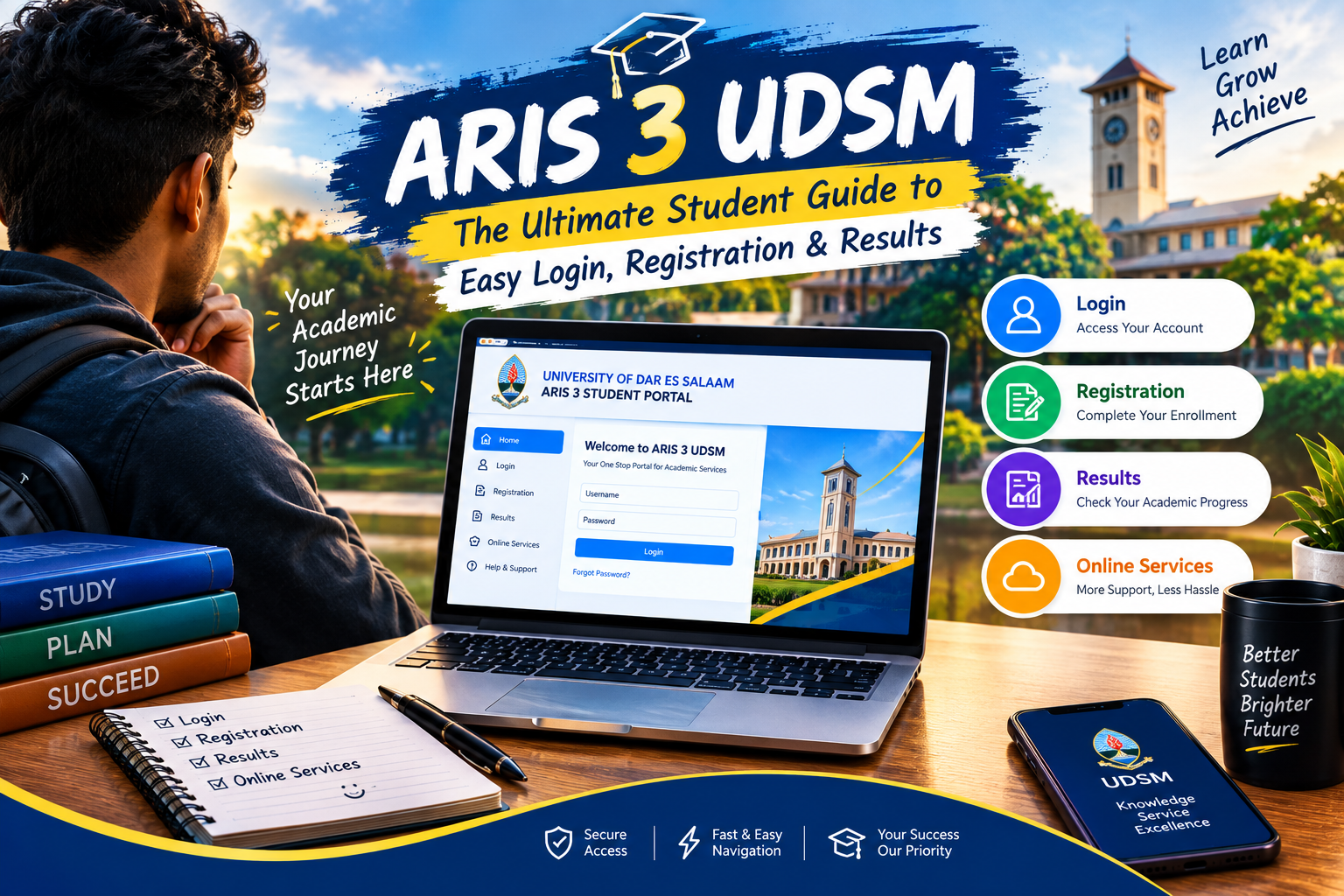
University life involves much more than attending lectures, completing assignments, and preparing for examinations. Students also need reliable ways to manage registration, academic records, results, schedules, and other administrative responsibilities. As universities continue moving services online, digital portals have become an important part of everyday student life.
For students searching for aris 3 udsm, understanding how a university portal fits into the academic journey can make many routine tasks easier. Instead of viewing the system as simply a webpage where students enter their credentials, it is more useful to see it as a digital gateway connecting students with academic and administrative services.
This guide takes a practical approach to aris 3 udsm, focusing on how students can approach portal access, registration, results, account security, troubleshooting, and digital academic management.
Start With the Student Journey
The easiest way to understand aris 3 udsm is to follow the journey a student normally takes through a university system.
The journey begins with access. Students need to reach the correct portal and sign in with their authorized credentials.
After access, the student may need to complete administrative activities such as registration or review academic information.
Later, the same digital environment may become useful for checking academic results, reviewing information, or accessing other student-related services.
This journey-based approach is more useful than memorizing a long list of buttons because it explains why students use a portal in the first place.
What Makes a Digital Student Portal Useful?
A system such as aris 3 udsm can help move routine academic administration into an online environment.
Traditional university administration can require students to visit different offices for different tasks. A digital system can reduce some of that effort by bringing selected services together.
The benefits of an online portal can include:
- Easier access to academic information
- More convenient registration processes
- Faster access to available results
- Centralized student information
- Reduced dependence on physical paperwork
- Better access from computers and mobile devices
- Easier tracking of completed online tasks
The exact services available can depend on university policies, student status, and system updates, so students should always follow current official instructions.
The First Step: Accessing the Portal Safely
Before using aris 3 udsm, students should make sure they are accessing the legitimate university system.
This is particularly important because search engines can sometimes display unofficial pages, copied information, or websites that imitate familiar services.
A safer access routine is straightforward:
- Begin with an official university source.
- Verify the website address before entering credentials.
- Avoid suspicious links received through unknown messages.
- Keep usernames and passwords private.
- Log out when using a shared computer.
These simple habits can reduce the risk of exposing personal or academic information.
Why the correct website matters
A login page can look convincing while still being unofficial. Students should therefore avoid judging a website only by its appearance.
When using aris 3 udsm, the safest approach is to verify the portal address through an official university source before signing in.
Registration: Turning a Complicated Task Into a Process
One of the most important areas of digital university administration is registration.
Students often approach registration as a single task, but it can actually involve several steps. Requirements, deadlines, selections, confirmations, and approvals may all play a role.
If registration services are available through aris 3 udsm, students should approach the process carefully instead of rushing through the available options.
Before registration
Before starting, students should:
- Check official university announcements.
- Review relevant academic requirements.
- Note registration deadlines.
- Prepare necessary information.
- Make sure their account is accessible.
During registration
While completing the process:
- Enter information carefully.
- Review selected courses or options.
- Check for missing requirements.
- Read confirmation messages.
- Save important reference information when provided.
After registration
Once the process appears complete:
- Confirm the final status.
- Review submitted information.
- Keep confirmation details.
- Watch for further university instructions.
This three-stage method can make aris 3 udsm registration easier to manage and can reduce mistakes caused by last-minute activity.
Understanding Academic Results
Another reason students may search for aris 3 udsm is to find information about academic results.
Digital academic systems can provide students with access to results or academic records when those services are made available by the university.
Results are particularly important because they can influence decisions about future courses, academic progress, and other university activities.
How to approach result checking
When checking results, students should make sure they are using the official system rather than relying on screenshots or unofficial posts circulating online.
It is also useful to record important information after results become available. If a student needs to discuss an issue with university staff later, accurate records can make the conversation easier.
Most importantly, students should not share screenshots publicly if those screenshots contain registration numbers, usernames, personal information, or other private details.
Read more: About Naolozut253: Powerful Meaning, Smart Research & Complete Guide
Seven Practical Areas Students Should Know
Rather than thinking of aris 3 udsm as one complicated system, students can divide their portal experience into seven practical areas.
1. Account Access
The first area is basic account access. Students need valid credentials and the correct portal address.
If login fails, they should avoid repeatedly guessing passwords and instead use the official recovery or support process where available.
2. Student Registration
Registration allows students to complete relevant academic or administrative requirements online when those functions are provided.
Careful review is important because errors can create problems later.
3. Academic Results
Students may use the system to view available academic results or records.
Official portal information should always take priority over unofficial information shared elsewhere.
4. Student Information
A digital portal may contain information associated with a student’s academic or administrative profile.
Students should check information carefully and follow official procedures if something needs correction.
5. Academic Communication
University systems may also be connected with notices, instructions, or other information intended for students.
Checking official digital channels regularly can help students avoid missing important updates.
6. Administrative Tasks
Online student systems can bring different administrative processes into one environment.
This can save time, particularly when students need to complete routine tasks without visiting an office.
7. Digital Support
When something does not work correctly, students need a reliable way to identify the problem and contact the appropriate support channel.
Understanding this support pathway is just as important as knowing how to log in.
Making Login Problems Easier to Solve
Login issues are among the most common problems students can encounter with online portals.
When aris 3 udsm does not accept a login attempt, students should avoid immediately assuming that their account is permanently blocked.
There can be several possible causes:
- Incorrect username
- Incorrect password
- Forgotten credentials
- Browser problems
- Internet connection issues
- Temporary system maintenance
- Account-related restrictions
- Incorrect portal address
A simple login checklist
Start by checking the username carefully.
Next, verify the password and capitalization.
Then confirm that the internet connection is working.
After that, make sure the official portal address is being used.
If the problem continues, check official university announcements for maintenance or service interruptions.
Finally, use the authorized account recovery or support process.
This logical sequence is more effective than repeatedly entering different passwords.
Mobile and Computer Access
Students increasingly depend on smartphones for university-related activities. At the same time, laptops and desktop computers can be more convenient for tasks involving multiple fields or larger amounts of information.
When accessing aris 3 udsm from any device, students should focus on both convenience and security.
On a personal device
Keep the operating system and browser updated. Avoid installing unknown software that claims to improve portal access.
On a shared computer
Do not save your password in the browser.
Do not leave the account open after finishing.
Always log out before leaving the device.
On public networks
Avoid entering sensitive credentials on networks you do not trust. When possible, use a secure personal connection.
Protecting Your Student Account
A university account can contain information that students should treat as private.
Students should never casually share:
- Passwords
- Verification codes
- Account recovery information
- Personal identifiers
- Private academic records
If someone claims to be offering technical assistance and asks for a password, students should verify that person’s identity through an official channel.
When using aris 3 udsm, account security should be considered part of normal academic responsibility rather than an optional extra.
How to Handle an Error Message
When a portal displays an error, taking a screenshot can sometimes help with troubleshooting—but students should first make sure that the screenshot does not reveal sensitive information.
Instead of immediately trying random solutions, record:
- The exact error wording
- What action caused the error
- The date and approximate time
- The browser or device being used
- Whether the issue happens repeatedly
This information can help support staff understand the problem more quickly.
The Smart Registration Routine
Students can make their digital academic life easier by creating a simple routine around aris 3 udsm.
Weekly awareness
Students do not necessarily need to log in constantly. However, they should remain aware of important university announcements and deadlines.
Registration period
During registration periods, check requirements early rather than waiting until the final day.
Examination period
Keep track of official examination information and relevant instructions.
Results period
Check official result channels and preserve important academic information.
This routine reduces the chance of discovering an important deadline only after it has passed.
Common Mistakes to Avoid
Even a well-designed student portal cannot prevent every user error.
Waiting until the deadline
Leaving registration until the final hours can be risky. Technical problems, heavy traffic, or account issues may require time to resolve.
Using unofficial links
Searching the internet and clicking the first login result can expose students to unnecessary risks.
Sharing credentials
No legitimate reason exists for casually giving another person access to a student’s account.
Ignoring confirmation
After completing an online process, students should look for a confirmation message or status where applicable.
Sharing private screenshots
Publicly posting screenshots containing personal academic information can create privacy problems.
Avoiding these mistakes can make the overall aris 3 udsm experience safer and more organized.
What To Do When Something Goes Wrong
A useful troubleshooting method is to separate the problem into three categories.
Category One: Access problem
You cannot reach the portal.
Check the internet connection, browser, website address, and official service announcements.
Category Two: Account problem
You can reach the page but cannot sign in.
Check credentials and use official recovery options.
Category Three: Service problem
You can log in, but a particular function does not work.
Record the error and follow the university’s support process.
This classification prevents students from treating every problem as a password issue.
Why Official Sources Should Come First
Search engines are useful for discovering information, but they should not replace official university instructions.
For aris 3 udsm, students should give priority to authorized university sources for:
- Login information
- Registration deadlines
- Academic procedures
- Results
- Account recovery
- System announcements
- Support contacts
Third-party websites may provide helpful explanations, but important academic decisions should be verified against current official information.
Read more: How Geopolitical Events Impact Your Investment Strategy
Building Better Digital Habits
The value of aris 3 udsm is not limited to completing one registration task. It can also encourage students to develop stronger digital habits.
Good habits include checking information early, maintaining secure passwords, recording important confirmations, reading official announcements, and keeping private data protected.
These habits can benefit students beyond university.
Digital administration is now part of many areas of modern life, from banking and employment to professional training and government services. Learning how to navigate an academic portal responsibly can therefore develop skills that remain useful long after graduation.
Frequently Asked Questions
What is aris 3 udsm?
aris 3 udsm refers to the ARIS 3 student-facing academic information environment associated with the University of Dar es Salaam. Students should use current official university resources to confirm the latest available services and procedures.
Can students use aris 3 udsm for registration?
Registration-related functions may be provided through the system. The exact process can depend on university rules and the student’s circumstances, so current official instructions should be followed.
Can students check results through the portal?
Academic results may be made available through the university’s digital systems. Students should rely on official information when checking their academic performance.
What should I do if I cannot log in?
First verify the portal address, username, password, internet connection, and any official maintenance notices. If the problem remains, use the authorized recovery or support channels.
Should students share their portal passwords?
No. Login credentials and verification information should remain private.
Is it better to use a phone or computer?
Either device can be useful, depending on the task and the portal’s compatibility. A larger screen may be more convenient for detailed administrative work, while a smartphone can provide convenient access when away from a computer.
Final Thoughts
aris 3 udsm represents an important part of the modern digital student experience. Rather than seeing an academic portal as merely a place to enter a password, students can view it as a central point for managing parts of their university journey.
From registration and academic information to results, account management, and student services, digital systems can make routine university administration more accessible.
The key is responsible use. Students should always verify the official portal, protect their credentials, follow current university instructions, check deadlines early, and keep evidence of important online processes when appropriate.
Ultimately, getting the most from aris 3 udsm is not about clicking through every available option. It is about knowing which services you need, using them at the right time, protecting your information, and relying on official sources whenever an important academic decision is involved.
With these habits, students can make their digital academic workflow more organized, efficient, and secure.